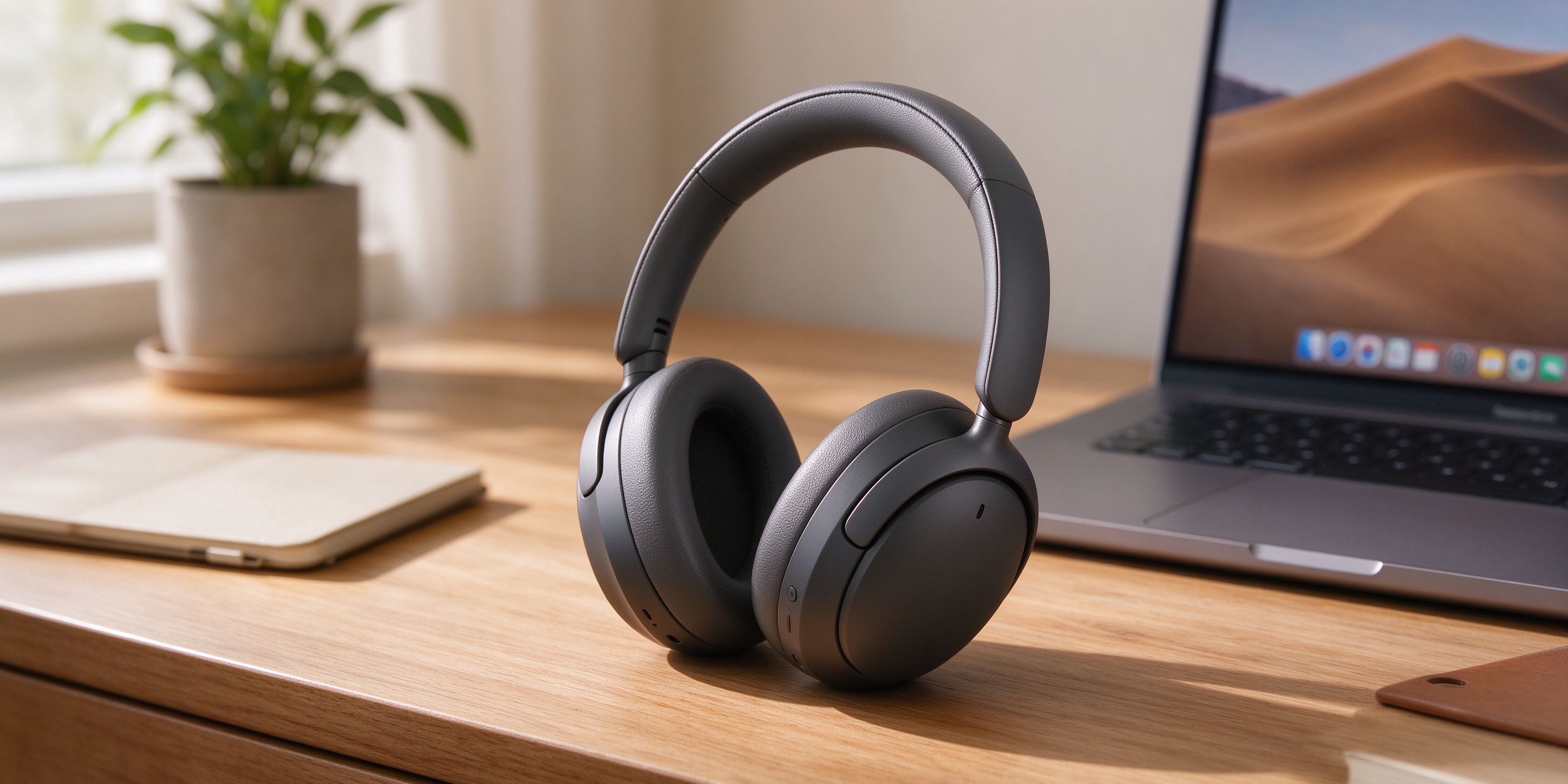
There are hundreds of wireless headphones on the market, and the specs sheet is full of jargon. This guide cuts through it: we explain what actually matters, what's marketing, and how much you should spend.
1. Decide Over-Ear vs In-Ear First
This is the biggest decision, and it comes down to lifestyle:
- Over-ear (around-ear): Better sound, better noise cancellation, more comfortable for long sessions. Bulky and less portable. Best for office, travel, home use.
- In-ear (true wireless earbuds): Pocket-sized, great for the gym and commuting. Less isolation and smaller batteries. Best for active people and all-day wear.
Don't overthink this: if you mainly work at a desk or fly often, go over-ear. If you're always moving, go earbuds.
2. Noise Cancellation: Do You Actually Need It?
Active Noise Cancellation (ANC) cancels low-frequency hum — airplane engines, air conditioners, train rumble. It does not fully cancel voices.
Get ANC if: You fly often, work in an open office, or commute on public transit.
Skip ANC if: You mainly listen at home in a quiet room, or you're on a tight budget. Transparency mode (letting outside sound in) is more useful than people think.
3. Battery Life: What's Realistic?
Manufacturer numbers are tested in ideal conditions. In real use:
- Over-ear: 25–35 hours advertised → expect 20–28 hours with ANC on
- Earbuds: 6–8 hours per charge → expect 5–7 hours, plus 2–3 charges from the case
Anything above 20 hours for over-ear is enough for most people. Don't pay extra for "40 hours" unless you're a frequent long-haul traveler.
4. Sound Quality: Don't Chase Specs
You don't need to understand frequency response or impedance. Here's what matters:
- Bass: If you like hip-hop or EDM, look for "bass-forward" tuning. If you prefer vocals or classical, look for "balanced" or "neutral" tuning.
- Codec: Android users should look for LDAC or aptX HD for better wireless quality. iPhone users get AAC — all good pairs sound fine on iOS.
- Wired mode: Useful for flights and gyms. Check if the pair you're considering has a 3.5mm or USB-C wired option.
5. Comfort: The Most Underrated Factor
The best-sounding headphones are useless if they hurt after an hour. Check:
- Clamping force — too tight = headaches after 2 hours
- Ear cup size — small ears get fatigued by large, heavy cups
- Weight — anything over 280g starts to feel heavy on long flights
If you can, try them on in a store. If shopping online, check return policies — 30-day returns are standard.
6. How Much Should You Spend?
- Under $100: Good basic sound, weak ANC, plastic build. Fine for casual listeners.
- $100–$200: The sweet spot. Solid ANC, good comfort, reliable brands. Best value for most people.
- $200–$400: Flagship ANC, premium materials, best sound. Worth it if you use them daily.
- Over $400: Diminishing returns. Only buy if you're an audiophile or travel professionally.
7. Other Features That Matter
- Multipoint connection: Connect to two devices at once (laptop + phone). Very useful if you work from home.
- Call quality: If you take lots of work calls, check reviews specifically for microphone quality.
- App support: An app lets you update firmware, customize EQ, and toggle ANC modes. Brands without apps age badly.
For Athletes: Consider Bone-Conduction Headphones
If you run, cycle, or workout outdoors, standard in-ear headphones block too much ambient sound — which can be dangerous. Bone-conduction headphones sit outside your ear canal, leaving your ears open to hear traffic and your surroundings. DOOGEE makes a solid range of bone-conduction and sports headphones on Amazon that are worth checking out if you train outdoors.
Our Pick: Best Value ANC Headphones Under $100
If you want real noise cancellation without spending $300+, the TAGRY Hybrid ANC Headphones ($99) are our top pick in this price range. They offer hybrid active noise cancellation, 140-hour battery life (yes, really), a battery display on the ear cup, and ENC microphones for clear calls. Over 500 pairs are sold every month on Amazon with a 4.3-star rating from nearly 800 reviews. For the money, it's hard to beat.
The Bottom Line
For most people, the best wireless headphones are the ones that fit your lifestyle and budget. You don't need the most expensive pair. Decide over-ear vs in-ear first, set your budget, then read hands-on reviews of 2–3 pairs in your price range before buying.
Affiliate Disclosure: This article contains affiliate links. If you buy through them, we may earn a commission at no extra cost to you.